

The smart marketer’s guide to finding and winning high-value seller clients using real data.
In 2025, everyone’s chasing Amazon sellers — agencies, freelancers, software companies, wholesalers, and consultants. But while most are blasting cold emails or relying on paid ads, the savviest marketers are using Amazon seller data to get laser-focused with their outreach.
And they’re winning more clients with fewer resources.
In this guide, we’ll break down exactly how to use Amazon seller data to target the right clients, how to segment for maximum relevance, and where tools like Seller Contacts can power your acquisition engine.
Amazon isn’t slowing down. In Q1 2025, over 60% of products sold on Amazon came from third-party sellers, and that seller ecosystem is booming. But here’s the nuance:
This makes Amazon sellers ideal clients for service providers, especially if you offer:
But targeting them at scale? That’s the challenge. And that’s where Amazon seller data becomes a weapon.
Most service providers do some version of this:
It’s slow, vague, and full of guesswork.
The truth? Without real, structured seller data, you’re flying blind. You’re spending time (and money) on leads that were never a fit.
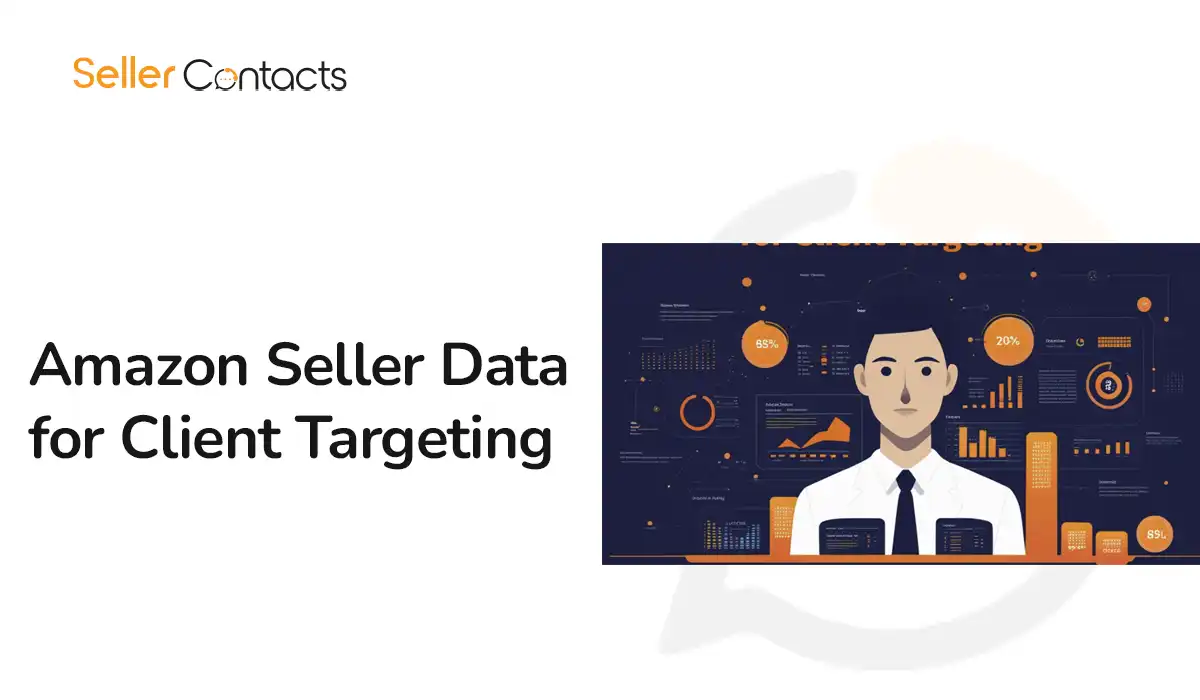
Amazon seller data gives you hard facts that drive targeted, intelligent outreach.
With a robust dataset like the one from Seller Contacts, you can filter sellers by:
| Data Point | Why It Matters |
| Revenue range | Focus on sellers with budgets aligned to your pricing |
| Product categories | Tailor services or software to the right niches |
| Fulfillment type | Target FBA sellers vs. FBM vs. hybrid models |
| Geography | Localize offers, events, or partnerships |
| Growth rate or age | Target fast-growing sellers or brand new entrants |
| Selling channels | Reach omnichannel sellers (Amazon + Shopify, etc.) |
| Company name + contact | Build personalized campaigns, not generic blasts |
Instead of guessing, you’re making data-driven decisions about who to pursue — and how to speak their language.
Let’s get specific. Here’s how different businesses are using Seller Contacts data to acquire clients more efficiently:
Use case: Filter for high-revenue FBA sellers in competitive categories (e.g., supplements, beauty).
Strategy: Offer creative refresh + campaign audits tied to their actual ASIN performance.
Use case: Find new sellers or those in saturated categories with poor listings.
Strategy: Show side-by-side comparisons and offer a free listing teardown.
Use case: Target sellers in specific niches with monthly sales over $20k.
Strategy: Offer custom white-label product opportunities with fast fulfillment.
Use case: Segment sellers by fulfillment type and category.
Strategy: Personalize demos of tools (e.g., inventory, repricing, analytics) for their model.
Use case: Filter by growth rate and SKU count.
Strategy: Reach sellers scaling too fast to manage daily operations alone.
With seller-level data, your outreach isn’t just more accurate — it’s more compelling.
At Seller Contacts, we built the world’s largest and most accurate Amazon seller database, continuously updated with fresh, actionable data.
Unlike other “lead lists,” Seller Contacts is built for eCommerce professionals — no fluff, just real targeting power.
Want to find 2,000+ Amazon sellers in the pet niche doing over $50k/month in the U.S.?
With Seller Contacts, you can filter, export, and outreach to that exact list — in under 5 minutes.
Here’s how you go from data to client:
Example: “Amazon sellers in the beauty niche, making $20k–$200k/month, using FBA.”
Apply filters by category, revenue, geography, and fulfillment model. Export contact list.
Pull in brand names, store links, and category info to personalize outreach.
Reference their product category, growth stage, or business model. Don’t sound generic.
Use tools like Instantly, Mailshake, or Lemlist for warm, multi-touch sequences.
Tag high-performing segments to refine and scale campaigns over time.
Use their brand name, product category, or recent growth signals in your messaging.
Offer a free audit, case study, teardown, or consultation first.
You don’t need to contact 10,000 people. You need 200 of the right ones.
If you’re seeing low reply rates, segment tighter or improve personalization.
Client acquisition doesn’t have to be a numbers game. When you use real Amazon seller data, it becomes a strategy game — and you get to play smarter.
With Seller Contacts, you can:
Whether you’re selling services, software, partnerships, or wholesale deals, Amazon seller data is your edge in 2025.