
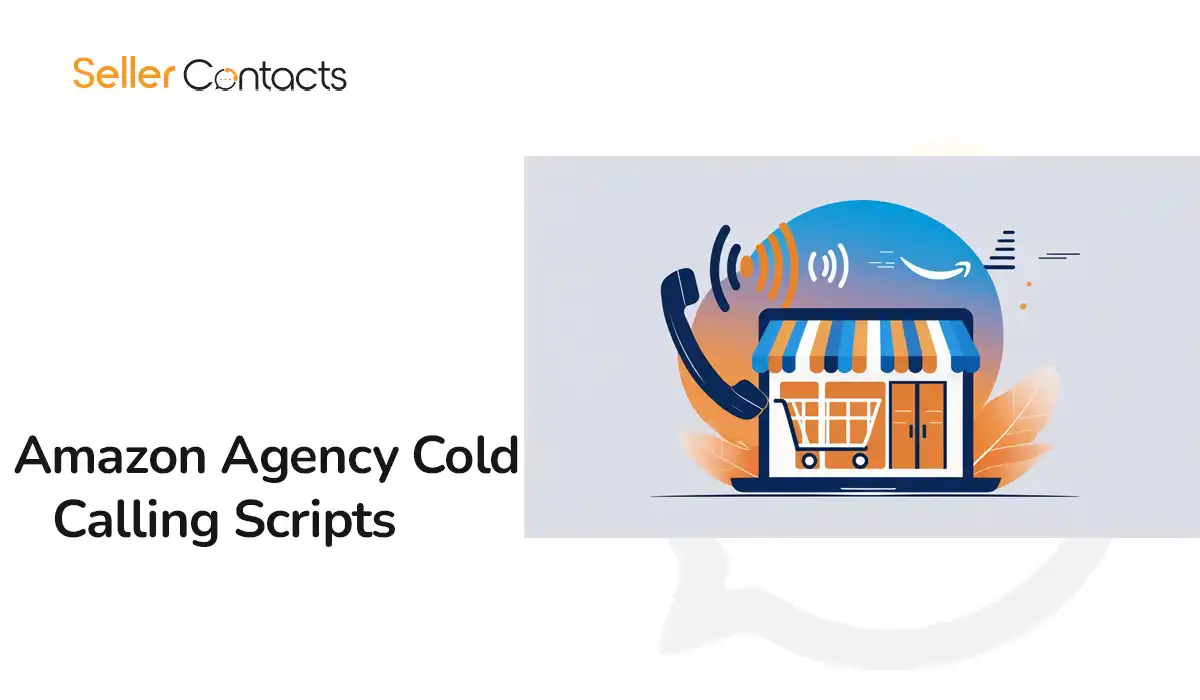
Cold calling remains one of the most effective ways for Amazon agencies to connect with sellers, offer their services, and build long-term business relationships.
But let’s be honest—cold calling is not easy. Amazon sellers are busy entrepreneurs who get flooded with service pitches daily. If you don’t grab their attention within the first 15 seconds, chances are they’ll either hang up or give you the dreaded “I’m not interested” response.
If you run an Amazon PPC agency, a full-service Amazon management firm, or offer services like listing optimization, branding, or fulfillment support, this guide will help you refine your cold calling approach.
In a world where inboxes are flooded and social media ads are everywhere, a direct phone call still holds power. The difference is simple—emails and messages can be ignored, but a phone call demands immediate attention.
Unlike automated emails that feel generic, a phone call is personal. It allows you to speak directly to the decision-maker and adjust your pitch based on their responses. You can ask questions, build rapport, and immediately address objections—all things an email simply cannot do.
Many Amazon sellers receive dozens of cold emails daily from agencies promising better PPC performance, higher rankings, and more sales. Most of these emails either go unread or end up in spam folders. A phone call helps cut through the noise and ensures your message is heard.
One of the biggest benefits of cold calling is that it allows you to quickly identify whether a seller is a good fit for your services. Instead of wasting time following up on dead-end email leads, a quick 5-minute call can tell you whether the seller is interested, what their pain points are, and if they’re willing to explore a solution.
Trust is a huge factor in business. Sellers are more likely to do business with someone they’ve spoken to rather than an anonymous email sender. When they hear your voice, sense your expertise, and engage in real conversation, they’re more inclined to consider your offer.
Before you pick up the phone, preparation is key. Going into a cold call blindly reduces your chances of success. Instead, a little research and strategic planning can make a massive difference in how the seller perceives your pitch.
Understanding the seller’s business allows you to tailor your pitch instead of sounding generic. Before calling, check their:
A quick 5-minute check on their store can help you craft a pitch that directly speaks to their needs.
Most sellers face common struggles such as:
Knowing these pain points helps you position your agency as the solution to their problems.
Rather than calling random sellers, targeted cold calling yields better results. With a database like Seller Contacts, you can:
When you know who you’re calling and why, your conversion rates increase significantly.
Timing is everything in sales. Avoid Mondays and Fridays, as sellers are usually overwhelmed with orders and administrative tasks. The best time to call is mid-week (Tuesday to Thursday) between 11 AM and 4 PM, when sellers are more likely to be available and open to discussion.
A great cold calling script is more than just a memorized sales pitch. It should be structured yet flexible, allowing you to adapt based on the seller’s responses. Here are the key components every effective script should have:
The first few seconds make or break the call. You need to spark curiosity without sounding robotic. Instead of starting with “Hi, my name is X, and I work for Y agency,” try:
“Hey [Seller’s Name], I was looking at your Amazon store and noticed something interesting…”
This instantly piques their curiosity and makes them more likely to engage.
Once you have their attention, they’ll naturally wonder, “Who are you, and why should I listen to you?” Instead of a long-winded introduction, keep it concise:
“We work with brands like yours to optimize PPC campaigns, lower ACoS, and boost rankings. In fact, we recently helped a seller in your category increase sales by 42%.”
By mentioning specific results, you show expertise without sounding pushy.
Rather than launching into a sales pitch, ask about their current struggles. A good approach is:
“Are you currently running PPC campaigns, or do you find them too expensive?”
This makes the call a conversation rather than a monologue.
Once they reveal their pain points, tie it back to how your agency can help:
“We’ve helped sellers reduce ACoS by 30% while increasing sales—without increasing ad spend. I’d love to show you how.”
A concise, benefit-driven statement keeps them engaged.
Sellers often have objections like:
Instead of pushing back aggressively, acknowledge and reframe:
“That’s great! What’s one thing your current agency could be doing better?”
This keeps the conversation going rather than ending it abruptly.
The goal isn’t to close the deal immediately but to schedule a follow-up call:
“Let’s set up a free strategy call to analyze your PPC performance. How’s Tuesday at 2 PM?”
This makes it easy for them to say yes without feeling pressured.
Every cold call should feel natural, not like a robotic sales pitch. That’s why your script should serve as a guideline, allowing flexibility based on how the seller responds. Below are three battle-tested scripts designed for different scenarios:
📞 You: “Hey [Seller’s Name], I came across your Amazon store and noticed you’re selling [Product Category]. Quick question—are you happy with how your PPC campaigns are performing?”
🛒 Seller: “Uh, who is this?”
📞 You: “Good question! I’m [Your Name] from [Your Agency Name]. We help Amazon sellers like you optimize their PPC campaigns to lower ACoS while increasing sales. Just last month, we helped a seller in [related niche] cut ad costs by 30% while boosting revenue. Does that sound like something you’d be interested in?”
If they show interest, proceed to a quick discovery question:
📞 You: “What’s your biggest challenge with PPC right now? Too much ad spend, low conversions, or just not seeing enough results?”
This keeps the conversation focused on their pain points instead of making it all about your services.
📞 You: “Hey [Seller’s Name], I was checking out your [Product Name] listing, and I noticed something interesting. You’re getting decent reviews, but I see a few things that might be holding your conversion rates back. Have you had a chance to test different images or keyword strategies?”
🛒 Seller: “Not really. Why?”
📞 You: “Well, we specialize in Amazon listing optimization—helping sellers improve rankings, increase click-through rates, and boost conversions. In fact, we recently worked with a brand in [related category] that saw a 25% increase in sales after a few key listing tweaks. I’d love to show you what we found on your page. Do you have 10 minutes tomorrow for a free strategy call?”
Here, you’re leading with insights and value rather than a direct sales pitch.
📞 You: “Hey [Seller’s Name], I noticed you’re selling [Product] on Amazon. A quick question—are you currently using Amazon FBA, or do you handle fulfillment yourself?”
🛒 Seller: “Yeah, we use FBA. Why?”
📞 You: “That’s great. We help sellers like you reduce storage fees, avoid stockouts, and optimize FBA costs. For example, one of our clients in [similar niche] cut fulfillment costs by 18% using our inventory planning system. Would it be worth a quick call to see if we could help you do the same?”
With this approach, you’re leading with a specific benefit that immediately grabs their attention.
Most sellers won’t say “Yes, sign me up!” right away. They’ll have objections—some real, some just a reflex to get off the call. Your job is to handle them gracefully and confidently.
Best Response: “I totally understand. Just curious—are you happy with your PPC results, or is there anything you wish was performing better?”
Why this works: It shifts the focus from rejection to an open-ended discussion. Many sellers say they’re “not interested” out of habit but will engage if you ask the right question.
Best Response: “That’s great! Just out of curiosity, what’s one thing they could be doing better?”
Why this works: You’re not asking them to switch agencies—you’re inviting them to compare. This often leads to them revealing their dissatisfaction, giving you an opening.
Best Response: “I hear you. How about I send over a quick analysis of your account, and if it looks valuable, we can set up a call next week?”
Why this works: It removes the immediate time commitment while keeping the conversation open.
Best Response: “I get that. A lot of sellers worry about costs, but most of our clients actually save money by optimizing ad spend. Would it make sense to at least take a look?”
Why this works: It reframes the service as a cost-saving strategy rather than an expense.
Even with a great script, cold calling is a numbers game. But by refining your approach, you can improve your conversion rate significantly.
Cold calling works best when combined with other outreach methods. Instead of relying on just one phone call, try a sequence like this:
This keeps you on their radar without being too pushy.
Sellers are wary of aggressive sales tactics. Instead of pushing a service, position yourself as a problem solver:
Bad: “We offer PPC management services. Are you interested?”
Better: “I noticed your ACoS is a bit high. Have you tested different bidding strategies?”
The second approach feels natural and insightful, making sellers more receptive.
One of the best ways to improve is by listening to your own calls. Track key data points like:
Small tweaks can make a huge difference in conversion rates.
Most deals aren’t closed on the first call. If a seller shows interest but doesn’t commit, schedule a follow-up:
📞 You: “You mentioned that your ACoS is high, but now isn’t the best time. Would it be okay if I check back in two weeks to see how things are going?”
A simple scheduled follow-up prevents leads from going cold.
Cold calling isn’t easy, but for Amazon agencies, it remains one of the fastest ways to generate leads and win clients. The key is to approach it strategically—research sellers before calling, craft compelling scripts, handle objections gracefully, and follow up persistently.
If you’re serious about growing your agency, consistency is everything. The more calls you make, the better you’ll get. Over time, you’ll refine your pitch, build confidence, and start closing deals like a pro.
Are you ready to take your Amazon agency to the next level? Pick up the phone and start making calls—your next big client could be just one conversation away.