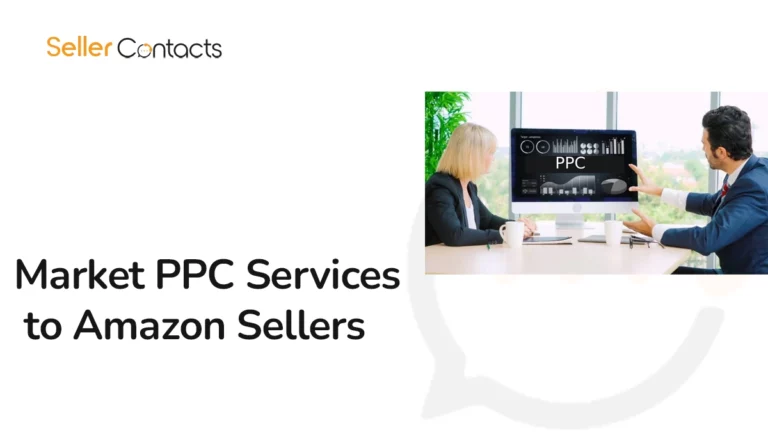

Amazon’s ad platform has grown into one of the most competitive—and lucrative—spaces in digital marketing. As more sellers flood the marketplace, paid advertising has become essential, not optional. But here’s the thing: most Amazon sellers aren’t PPC experts. They’re product people, brand builders, or wholesalers. They need help. And this creates a massive opportunity for PPC freelancers, agencies, and consultants.
If you’re offering PPC services, the smartest thing you can do in 2025 is target Amazon sellers directly. In this guide, we’ll show you how to do it, the right way, using precision tools like Seller Contacts, effective outreach strategies, and lead qualification techniques that convert.
Let’s start with the big picture.
Amazon’s ad revenue hit over $47 billion in 2024, according to Insider Intelligence. Sponsored Products, Sponsored Brands, and DSP campaigns are now a major part of every serious seller’s strategy. And ad competition is fierce—CPCs are rising, and organic reach is harder to sustain.
Yet many sellers still run their campaigns blindly. Some are wasting thousands each month. Others are underutilizing their budgets or using outdated strategies. Many are scaling fast and need expert help to grow without bleeding profit.
That’s where you come in. The demand is high—but so is the noise. To win in this space, you need to target the right sellers, with the right offer, at the right time.
And that begins by understanding who you’re actually selling to.
Not all sellers are created equal. Some are doing $500/month. Others? $5 million. Knowing who you’re talking to is key to positioning your service properly.
Let’s break it down.
Private Label Sellers – They’ve built their own brand. They care deeply about their listings, brand voice, and reviews. These sellers typically run Sponsored Products and Sponsored Brands and are always looking to improve ACoS or scale profitably.
Wholesale Sellers – They buy in bulk and resell existing brands. Many run ads just to hold the Buy Box longer. They often have multiple ASINs and need help optimizing their ad structure.
Aggregators – These are venture-backed businesses that acquire multiple brands. Think Thrasio-style operations. They’re data-obsessed, have real budgets, and often look for agencies who can handle multi-brand portfolios.
Retail Arbitrage / Dropshippers – Usually not great clients. They’re inconsistent and price-driven. Best to skip.
If you’ve talked to even a handful of sellers, you’ll notice common patterns:
These are all pain points you can solve. And when you speak to those specific problems in your pitch, sellers listen.
Before you hit send on a single outreach email, pause.
You need to define exactly who you’re targeting. Otherwise, you’ll burn time on leads that will never convert.
Ask yourself:
The more you narrow it down, the better your messaging will be—and the higher your close rate.
This is where Seller Contacts becomes a game-changer.
Unlike scraping tools or keyword software, Seller Contacts is purpose-built for one thing: finding and connecting with eCommerce sellers.
Inside the dashboard, you can:
It’s the most accurate and scalable way to find Amazon PPC clients—without wasting hours manually browsing Amazon or LinkedIn.
If you’re serious about growing your client base, you need a real system for prospecting.
With Seller Contacts, you skip the guesswork. You’re not just seeing products—they show you the businesses behind them.
Want to target:
You can do that in a few clicks. And every seller comes with data points you can use to personalize your outreach.
Let’s be honest. There are other ways to find sellers, but they’re clunky or inefficient.
These tools help sellers, but not service providers like you. Seller Contacts is built for agencies and consultants looking to scale with actual clients, not just data.
Now that you’ve found your leads, let’s talk about outreach that works.
The inbox is crowded. You have 3 seconds to get their attention. Your email needs to be short, sharp, and value-focused.
Here’s a basic framework that works:
Subject: Saw your Vitamin C Serum on Amazon – Quick PPC Win?
Body:
Hey [First Name],
I came across your [Brand Name] storefront and noticed some great traction on your Vitamin C Serum.
I run PPC for health brands on Amazon and recently helped another seller drop ACoS from 42% to 21% while scaling revenue 1.8x in 6 weeks.
Would you be open to a quick 10-minute audit? I’ll show you exactly where your campaigns might be leaking spend.
– [Your Name]
Make it about them, not you. Give value first. Use data when possible.
If you have a seller’s name or brand, plug it into LinkedIn. Connect casually—no hard pitch yet. Engage with their content if they post. Then follow up with a message like:
“Hey [Name], I work with a few brands in [category]. Noticed your storefront—great listing work. Mind if I share a quick PPC tip we used with [similar brand]?”
You’re warming them up for the pitch later, without coming off as spammy.
You need a reason for them to care. A few that tend to work:
Don’t just sell a service. Sell an outcome.
Once you’ve started reaching out, not every reply will be a good fit. Some sellers just aren’t ready for PPC help. Others might be impossible to work with.
So, before you jump on a call or send a proposal, do a basic qualification check.
Here’s what to look for:
These are all green flags. It means they want to grow—and probably need your help to do it efficiently.
If you’re using Seller Contacts, you can filter for these traits during your lead generation process. The platform lets you preview storefronts and product categories so you don’t waste time on underqualified prospects.
If you’re serious about scaling your PPC agency or freelance service, you can’t be manually sending emails all day. You need automation, but done right.
You can pull your filtered seller list from Seller Contacts, upload it to your email tool, and start sending.
But don’t go full robot. Always add dynamic personalization tags:
For example:
“Saw your new home decor collection on Amazon—love the color choices. Curious—are you running Sponsored Brands yet, or just SP?”
That level of light personalization increases reply rates dramatically.
One of the biggest mistakes PPC freelancers and agencies make is not following up enough.
Sellers are busy. They’re juggling inventory, supply chains, reviews, and customer service. One email won’t cut it.
Here’s a simple follow-up structure:
You can pre-load this into your CRM or email tool. Just remember to customize the offer slightly for each industry or brand.
What sets Seller Contacts apart isn’t just the quantity of data—it’s the actionable precision.
You’re not buying a static list. You’re using a live, searchable platform that updates with new sellers regularly. This means:
It’s built for marketers, agencies, and consultants who want a repeatable system for client acquisition, not just a database.
Once a seller replies, your job is to move fast but build trust. The goal isn’t to sell immediately—it’s to uncover pain points and frame your service as the fix.
Here’s a simple 3-step conversion process:
Avoid over-complicating it. Sellers want solutions, not jargon.
In 2025, Amazon is no longer a level playing field. Ad costs are up. Competition is fierce. And every serious seller knows they need better PPC to survive and scale.
But they don’t know who to trust. That’s your opening.
With Seller Contacts, you can bypass the guesswork and go straight to high-potential leads. No scraping. No fluff. Just real sellers, with real budgets, needing real help.
If you’re ready to stop pitching cold and start pitching smart, this is your moment.
Try Seller Contacts and get direct access to thousands of qualified Amazon sellers—filtered, segmented, and ready to talk.