
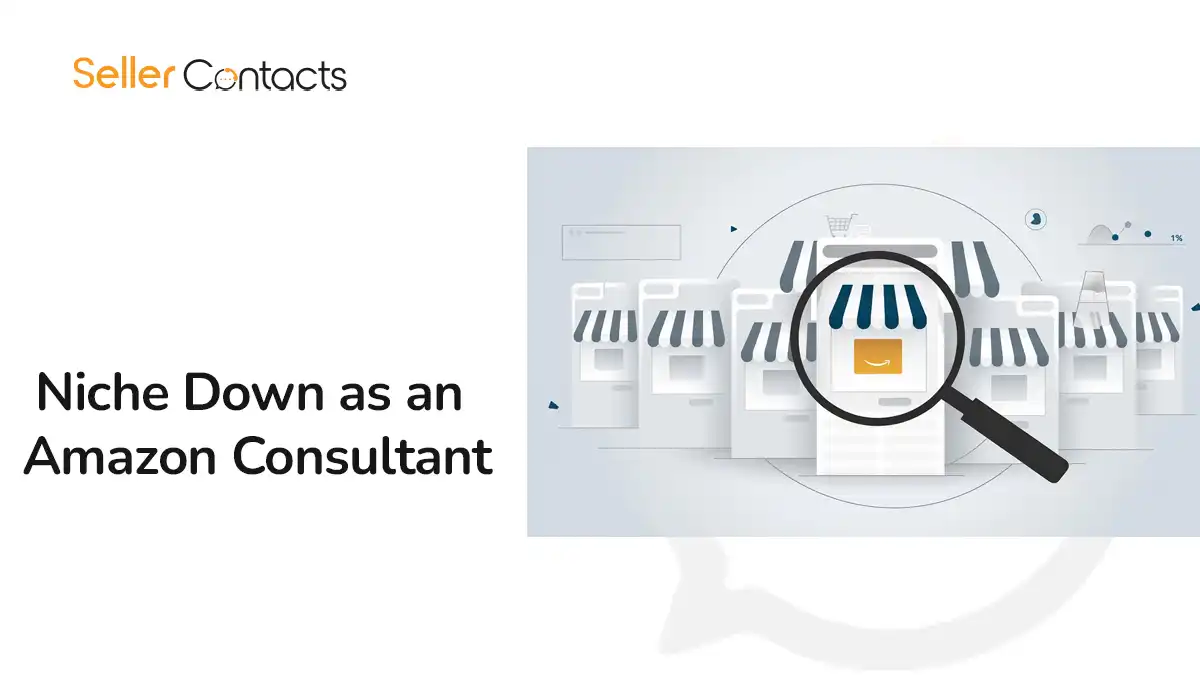
If you’re an Amazon consultant trying to land more clients and grow your business, you may have already noticed how competitive and crowded the space has become. The key to standing out and commanding higher fees is to niche down—becoming a specialist in a specific area rather than trying to serve every Amazon seller with generic services.
Specialization allows you to attract high-value clients who are actively looking for an expert in their exact problem area. This article will guide you through the why, what, and how of choosing a niche as an Amazon consultant.
Many consultants hesitate to specialize because they fear it will limit their opportunities. In reality, niching down does the opposite—it makes you more in demand. Here’s why:
Sellers are constantly bombarded with consultants offering “Amazon account management” or “full-service solutions.” But sellers don’t just want help—they want the right help from someone who deeply understands their unique challenges.
For example, if a supplement brand is struggling with Amazon PPC, they won’t hire just any consultant. They will seek an Amazon PPC specialist with a track record in supplements, someone who understands compliance, keyword targeting for highly competitive niches, and how to optimize for Sponsored Brands ads.
By positioning yourself as an expert in one area, you instantly become more valuable and credible than a generalist offering everything.
High-revenue sellers don’t want to waste time experimenting with generalists. They want to hire specialists who can solve their problem quickly and effectively. This means you can charge premium rates and work with fewer clients while earning more.
For example, a general Amazon consultant might struggle to get clients at $1,000/month, while a specialized Amazon PPC consultant for mid-sized brands can easily charge $3,000 to $5,000 per month for highly targeted PPC management.
When you try to serve everyone, you compete with every other consultant out there. But by choosing a niche, you drastically reduce competition and increase your chances of being the top choice in that market.
For example, instead of being a generic “Amazon consultant,” you could specialize in:
Each of these niches limits the competition and makes you the obvious choice for sellers in that space.
The more specialized and in-demand your services are, the more you can charge. Generalists often compete on price, but specialists can charge for expertise and results.
A generic Amazon consultant might charge $500-$1,000/month for full account management, while an Amazon Brand Protection Specialist helping private label sellers prevent hijackers can charge $3,000-$10,000 per project because they offer a highly specific and valuable solution.
There are multiple ways to niche down as an Amazon consultant. The key is to find a niche that aligns with your expertise, has strong demand, and isn’t overly saturated.
Different sellers operate in different ways, and each model has unique challenges. You can specialize in working with:
You can specialize in a specific service that Amazon sellers need, such as:
Amazon operates across hundreds of categories, each with its own rules, competition, and challenges. Specializing in one category makes you an invaluable resource for sellers in that space. Some lucrative categories include:
Different types of Amazon sellers have different budgets, pain points, and needs. You can focus on:
Amazon operates in over 20 marketplaces, each with different regulations, consumer behavior, and demand. You could specialize in:
By selecting a niche based on geography, you position yourself as the go-to expert for businesses expanding into that market.
With so many potential niches, how do you decide which one is best? The ideal niche should be:
Once you’ve identified your niche, the next step is finding and attracting the right clients. Knowing your ideal audience allows you to focus your marketing efforts, speak their language, and convert leads into paying clients faster.
Amazon has over 9.7 million registered sellers, but only about 2 million are actively selling. Not all of them will need your services, so narrowing your focus is essential.
A seller database like Seller Contacts gives you detailed insights into Amazon sellers, including:
For example, if you specialize in Amazon PPC for beauty brands, you can filter the Seller Contacts database for:
This targeted approach saves time and ensures you’re reaching clients who actually need your expertise.
Sellers don’t always actively search for consultants, so you need to go where they already are. Some of the best places to connect with potential clients include:
Amazon Seller Facebook Groups & Forums
Sellers frequently discuss problems in Amazon-focused communities like:
Engage in discussions by offering value first—answering questions, sharing insights, and subtly positioning yourself as an expert.
LinkedIn & E-commerce Networks
LinkedIn is goldmine for B2B networking. Many aggregators, private label brands, and e-commerce investors look for Amazon consultants on LinkedIn.
Amazon Conferences & Trade Shows
High-value sellers attend events like:
Speaking at or attending these events allows you to meet serious sellers in person and build long-term relationships.
Cold Outreach with a Seller Database
Using Seller Contacts, you can email or message sellers directly. A well-crafted cold email should:
A strong outreach strategy can bring high-quality leads without relying on ads.
Once you start attracting the right clients, you need to build trust and authority. The more credible you appear, the easier it becomes to close high-ticket clients.
A generic website won’t cut it. Your website should clearly communicate your niche expertise. Include:
For example, if you’re an Amazon PPC consultant for health brands, you might have a case study on how you reduced ACOS by 30% for a supplement company.
Sellers trust experts who educate and inform rather than just sell. Some effective content formats include:
When sellers see your expert insights for free, they are more likely to pay for your services.
The fastest way to establish trust is by showing real results. Use:
A client saying, “We 3X’d our Amazon sales in 60 days with [Your Name]’s help” is more convincing than any sales pitch.
Niching down as an Amazon consultant isn’t just a strategy—it’s the fastest path to building a profitable, in-demand business. Instead of competing with thousands of generalists, you position yourself as a high-value expert that sellers actively seek out.
By identifying a profitable niche, targeting the right clients, and positioning yourself as an authority, you create a consulting business that:
If you’re serious about finding high-value clients without spending months on trial and error, leverage Seller Contacts to pinpoint and connect with the right Amazon sellers—the ones who actually need and can afford your services.