

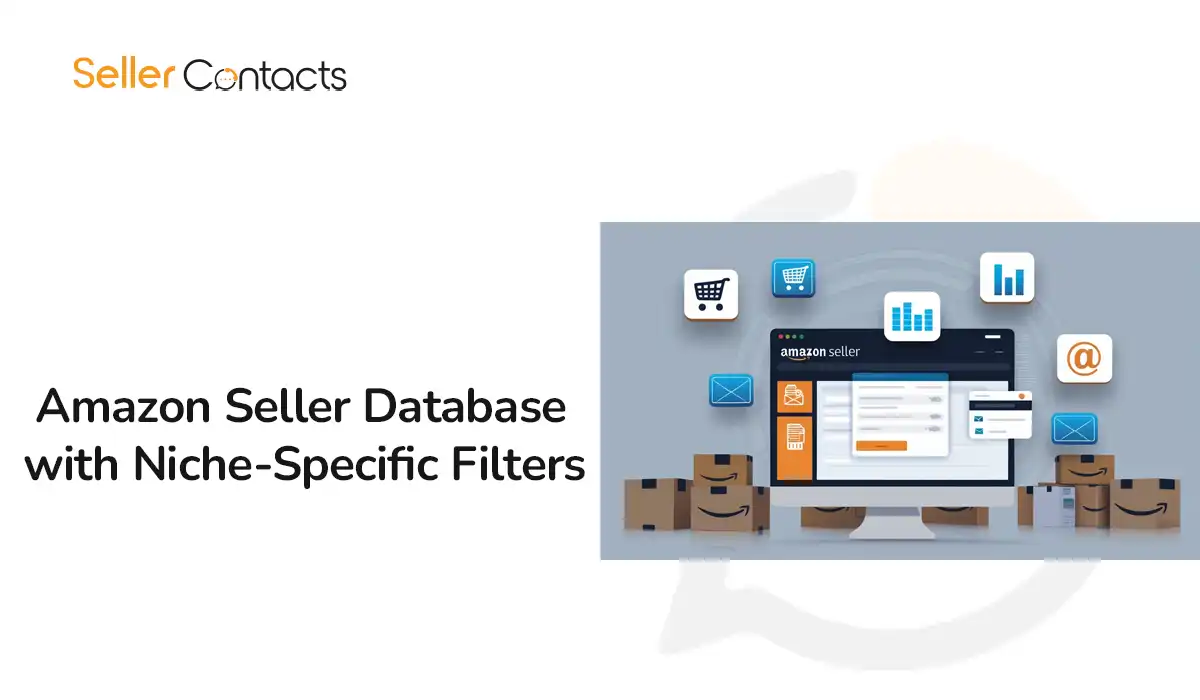
Finding the right Amazon sellers for your business can feel like searching for a needle in a haystack. Whether you’re a wholesaler, B2B service provider, SaaS company, or manufacturer, you need precise data to identify sellers who match your ideal customer profile. That’s where an Amazon seller database with niche-specific filters like Seller Contacts becomes a game-changer.
An Amazon seller database is a structured collection of data containing detailed insights about active Amazon sellers across various marketplaces. This data is compiled using a combination of publicly available information, proprietary data collection methods, and algorithmic analysis to provide accurate, up-to-date, and actionable insights.
At its core, the database helps businesses, marketers, and researchers find sellers that align with their goals—whether it’s partnering with high-revenue sellers, offering services to struggling brands, or identifying new product opportunities.
A high-quality Amazon seller database typically contains the following information:
Having access to this level of information allows businesses to streamline lead generation, optimize marketing efforts, and improve decision-making when approaching potential sellers.
One of the biggest advantages of a well-structured Amazon seller database is its ability to filter data based on specific criteria, allowing businesses to narrow their search and target sellers more effectively.
Instead of sifting through thousands of Amazon stores manually, you can apply niche-specific filters to identify sellers based on precise attributes.
Imagine you’re a wholesale supplier specializing in beauty products. Instead of reaching out to thousands of random sellers, you can filter for Amazon sellers in the beauty category who generate at least $50,000 in monthly sales and operate in the US or UK.
By using these highly targeted filters, you:
Niche-specific filters turn a general database into a powerful lead-generation machine, giving you a clear advantage over competitors relying on manual research or outdated seller lists.
An Amazon seller database isn’t just for one type of business—it’s a valuable tool for a wide range of industries. Whether you’re in e-commerce services, software development, wholesale distribution, or logistics, having access to accurate and well-filtered seller data can open up new business opportunities.
Amazon sellers often require support services like Amazon PPC management, SEO optimization, product photography, and virtual assistant services. Agencies and freelancers offering these services can use a seller database to target sellers who need their expertise.
For example, an Amazon PPC agency looking for high-spending sellers with under-optimized ad campaigns can filter for mid-sized FBA sellers generating $100K+ monthly revenue and start outreach efforts.
Suppliers and wholesalers seeking bulk buyers can identify top-performing sellers in their niche and offer them better pricing or exclusive deals.
For example, a China-based supplier of eco-friendly kitchenware can filter for Amazon US and EU sellers in the home & kitchen category who generate at least $75K in monthly sales and approach them with a tailored offer.
Developers of Amazon-related SaaS tools—such as inventory management software, keyword tracking tools, or automation solutions—need to target sellers who actually need their technology.
Using niche-specific filters, a SaaS company offering AI-driven repricing tools could focus on Amazon sellers generating over $500K annually who sell in competitive niches like electronics or toys.
Private equity firms, venture capitalists, and market researchers analyzing Amazon’s ecosystem can use filtered seller data to track emerging trends, identify acquisition targets, or benchmark industry growth.
For example, an investor looking to acquire successful private-label brands can filter for Amazon sellers with multiple top-ranking ASINs in fast-growing categories like pet supplies or fitness gear.
In today’s fast-paced e-commerce world, data-driven decisions separate successful businesses from struggling ones. Having an Amazon seller database with niche-specific filters allows you to:
Whether you’re a wholesaler, B2B service provider, SaaS company, or logistics firm, using structured, well-filtered seller data gives you a massive competitive advantage.
Instead of chasing random leads, start focusing on sellers who fit your ideal customer profile—and watch your sales, partnerships, and business opportunities grow exponentially.