
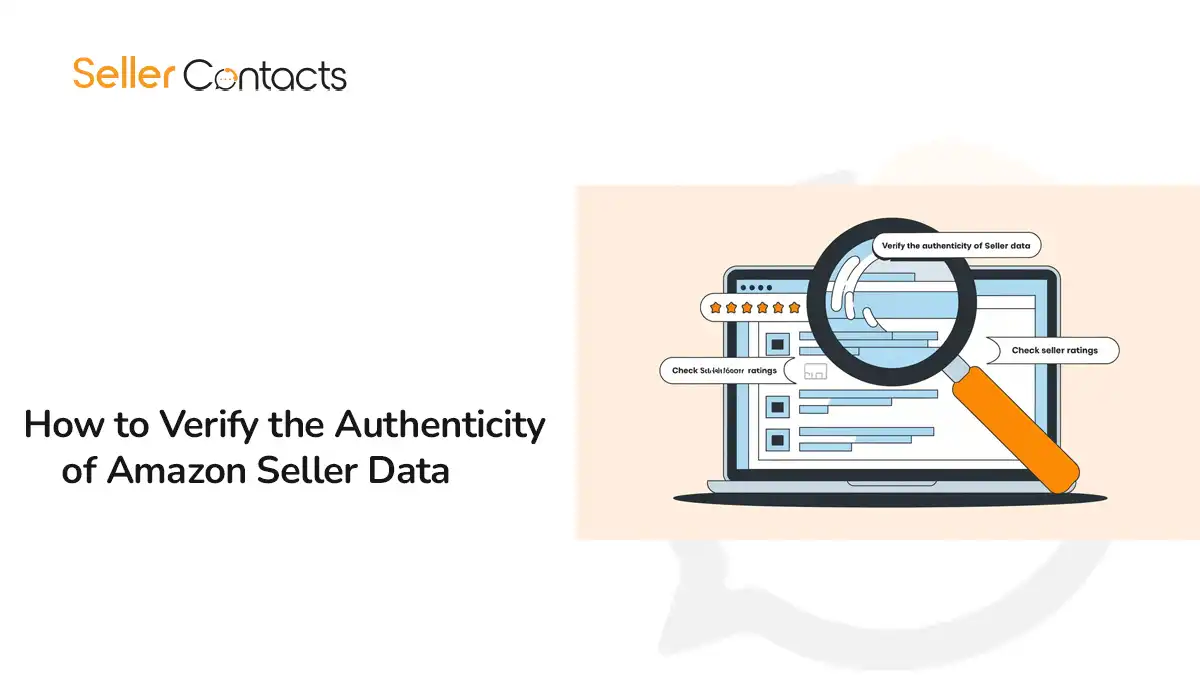
Amazon seller data plays a crucial role for businesses aiming to offer services, build partnerships, or drive targeted marketing campaigns. However, the real challenge lies in verifying whether this seller data, especially when sourced from third-party databases or lead lists, is authentic. Ensuring data accuracy can mean the difference between a successful campaign and wasted effort.
So, how can you verify the authenticity of Amazon seller data effectively? By using structured approaches such as cross-checking with Amazon’s platform, utilizing verification tools, and sourcing data from trusted providers like SellerContacts, businesses can safeguard their operations and maximize their ROI.
To begin, it’s essential to understand what Amazon seller data encompasses. This data typically includes details such as the seller’s name, storefront URL, product categories, ratings, reviews, and sometimes contact information like email addresses or phone numbers. For businesses offering B2B services or seeking partnerships, this data is invaluable. It enables them to identify potential clients, craft targeted proposals, and establish meaningful connections.
For example, a digital marketing agency might use seller data to identify small Amazon sellers needing ad optimization services. Similarly, logistics companies often rely on seller databases to approach merchants for fulfillment partnerships. Yet, the quality and authenticity of this data directly impact the success of such endeavors.
Unfortunately, not all data sources are reliable. Many third-party databases claim to provide accurate seller information but often include:
The consequences of relying on inaccurate data can be severe. Businesses risk wasting resources on invalid leads, tarnishing their reputation by contacting the wrong parties, or even falling victim to scams. This makes data verification a necessary step before initiating any campaign.
One of the simplest and most direct ways to verify Amazon seller data is to cross-check it against information available on Amazon itself. By visiting the seller’s storefront or profile, you can confirm key details such as:
For example, if a lead list claims a seller has 5,000 reviews but their Amazon profile only shows 500, this inconsistency should raise a red flag. While this method is effective, it can be time-consuming when dealing with large datasets.
When purchasing or using a third-party database, always verify its credibility. Start by asking for transparency about the source of the data. Was it collected through official APIs, manual research, or web scraping? Databases sourced from unreliable methods are more likely to contain inaccuracies.
Additionally, inquire about:
This is where SellerContacts excels. As the #1 seller database in the world, SellerContacts offers rich data with over 49+ points verified across 30+ trusted sources. The database is updated regularly, ensuring up to 99% accuracy. Whether you’re targeting Amazon, Shopify, or other e-commerce platforms, SellerContacts saves time and effort, eliminating the need for manual verification.
Business verification tools provide an additional layer of scrutiny. Platforms like ZoomInfo, Clearbit, or Apollo specialize in authenticating business information. You can also use government or official registries to verify business registration details. For example:
These tools are particularly helpful for identifying whether the seller operates as a legitimate business or just a small, unregistered operation.
Invalid contact information is one of the most common issues with third-party databases. To tackle this, use specialized tools for email and phone verification. Email validation platforms like Hunter, NeverBounce, or ZeroBounce ensure that the email addresses provided in the database are active and deliverable. Similarly, services like Twilio Lookup can confirm whether phone numbers are valid and currently in use.
For example, a logistics company trying to pitch to sellers via email can avoid wasting time on bounced emails by pre-validating addresses.
In today’s interconnected world, most businesses have some form of online presence beyond Amazon. Checking for the seller’s LinkedIn profile, official website, or social media accounts can help confirm their legitimacy. A seller with an active LinkedIn profile and a professional website is far more likely to be genuine than one with no online footprint.
Additionally, reverse image search tools can verify whether a seller’s logo or product images are unique or copied, providing another clue about their authenticity.
For businesses aiming to save time and effort, sourcing seller data from reputable and established providers is often the most efficient solution. Services like SellerContacts specialize in offering verified and accurate e-commerce seller databases for platforms like Amazon, Shopify, and more.
Why choose SellerContacts?
By leveraging SellerContacts, businesses can confidently eliminate concerns about outdated or incomplete data. This allows them to focus on building meaningful partnerships and scaling their operations without the hassle of manual verification.
Even when relying on trusted databases, following these best practices ensures you maintain high data quality:
For example, if you’re targeting top Amazon sellers for B2B partnerships, focus on sellers with high ratings and consistent sales activity.
Investing time and resources into verifying seller data yields significant benefits:
According to a recent survey, businesses that use verified seller data experience up to 45% higher conversion rates compared to those relying on unverified sources.
For service providers, B2B offerers, or those seeking partnerships with Amazon sellers, authenticity is not just a necessity—it’s a competitive edge. Accurate seller data allows businesses to craft personalized pitches, improve their targeting strategies, and establish trust. Conversely, engaging with false or irrelevant leads damages both efficiency and reputation.
By prioritizing authenticity, companies can position themselves as reliable and professional partners in a crowded marketplace. In industries where trust is everything, the accuracy of your seller data can make or break your business relationships.
When it comes to sourcing reliable Amazon seller data, SellerContacts stands out as the ultimate solution. Unlike other databases, SellerContacts offers:
With SellerContacts, you gain access to a global database of sellers, enabling you to scale your outreach and grow your business with confidence. Instead of worrying about the authenticity of your data, you can focus on creating impactful campaigns and forming strong partnerships.
Why is it important to verify Amazon seller data?
Verification ensures you work with accurate, relevant leads, improving campaign efficiency and protecting your reputation.
What makes SellerContacts the #1 seller database?
SellerContacts offers 49+ data points from 30+ verified sources with 99%+ accuracy, making it the most reliable option for Amazon and e-commerce seller information.
How often should I update my seller data?
Regular updates, ideally every quarter, help keep your database current and actionable, ensuring higher success rates.
Can I rely solely on automated verification tools?
No. While tools are helpful, manual cross-checking and sourcing data from trusted providers are essential for comprehensive accuracy.